Preserving Community Memories Through Everyday Conversations
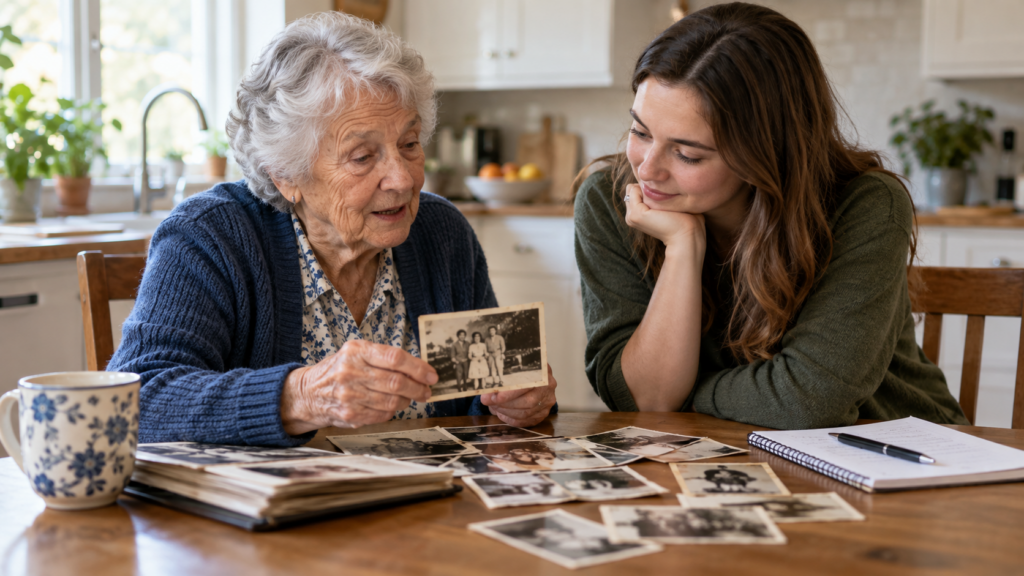
Community history includes more than official milestones. Everyday memories of a favourite gathering place, a school routine, or a changing street can help people understand how life felt at a particular time. Recording these stories begins with listening carefully and treating the person sharing them as a participant, rather than simply a source of material.
Start with a manageable purpose. You might want to preserve family recollections, collect memories for a small neighbourhood display, or create a private set of notes. Explain that purpose before asking detailed questions. People should know whether their words will remain with you, be shared with a group, or appear in a public project.
Let the storyteller shape the conversation
Ask open questions that invite description. What did an ordinary afternoon look like? Which places mattered to you? What do you remember most clearly about the journey to school or work? These prompts leave room for unexpected details. Avoid suggesting an answer or pushing someone to support a story you have already decided to tell.
Allow pauses and follow the person’s interests. A small detail about a shop window or a familiar sound may lead to a richer recollection than a list of dates. If a subject feels uncomfortable, offer to move on. Participation should remain voluntary throughout the conversation, including the choice to skip a question or end the session.
Ask explicitly before recording audio, video, or photographs. Agree on how the material may be used and whether the person’s name can appear. If you are taking notes, explain that too. Consent to a conversation does not automatically mean consent to online publication or reuse in a different project later.
Keep memories and verified facts distinct
After the conversation, write down the date, the context, and any details that require clarification. Memories can be meaningful even when a year or sequence is uncertain. Describe them as recollections rather than presenting every statement as an established historical fact. Where precise claims matter, check them against suitable independent records before publishing.
Offer the storyteller a chance to review the passages you plan to share. They may correct a name, explain a phrase, or request that a personal detail be removed. Keep quotations faithful to what was said and clearly distinguish your own summary from their words. Editing for readability should not change the meaning of the account.
Store the material in an organised way, with descriptive filenames and a separate note of the agreed permissions. Avoid collecting unrelated private information, and consider who should have access. A useful community memory project preserves both the story and the conditions under which it was shared. Its value comes from thoughtful attention, careful context, and respect for the people whose experiences make it possible.