Keeping a Nature Notebook on Familiar Walks
A nature notebook gives familiar walks a new focus. Instead of looking for an unusual sighting, you record what is present and how the surroundings appear on that particular visit. A changing patch of leaves, a pattern of shadows, or an unfamiliar sound can become a useful entry. The notebook begins with attention rather than specialist knowledge.
Choose a format you will comfortably carry and use. A small paper notebook works well for quick sketches and short notes, while a simple digital document may suit someone who prefers typing afterward. Avoid making the format so elaborate that preparing an entry becomes harder than taking the walk itself. A few clear observations are enough.
Record the scene before naming everything
Begin each entry with the date and a general description of the place. Add the conditions you noticed, such as cloud cover, wind, or damp ground. You do not need precise measurements unless they serve a purpose. Consistent basic notes make it easier to compare visits and remember the circumstances surrounding an observation.
Describe what you can see or hear in your own words. Note the shape of a leaf, the colour of a flower, or the rhythm of a bird call. If you do not know a name, leave the identification open. A careful description is more useful than confidently attaching the wrong label to something you only glimpsed.
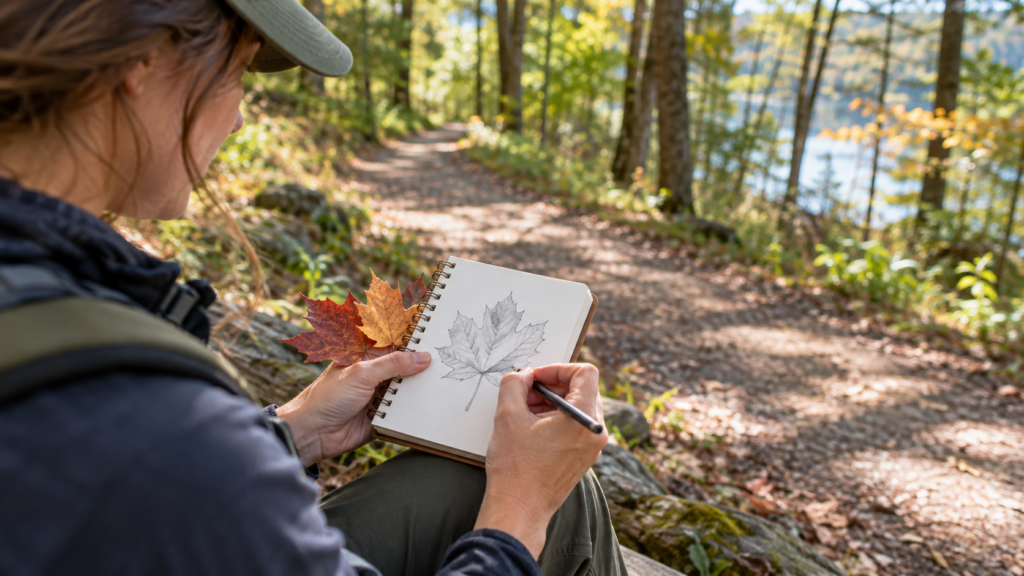
Sketching can help you notice details that a quick photograph might overlook. The drawing does not need to be artistic. A rough outline with a few written notes can capture the features that interested you. When using photographs, remain on appropriate paths and avoid disturbing animals or plants to obtain a closer view.
Build comparisons across repeated visits
Return to a place when it is practical and look for both changes and continuities. A plant may show a different stage, while the same sheltered corner still catches your attention. Keep the observation limited to what you actually encountered. Not seeing something on one visit does not by itself explain what happened to it.
Use reliable identification resources if you want to investigate an observation later. Compare several relevant features and retain uncertainty when the evidence is limited. Keep your original notes so that a later interpretation does not replace the record of what you first noticed. You can separate an observation from a possible identification in the same entry.
Review the notebook occasionally and choose one question for a future walk. You might look more closely at a particular tree or listen again at the same quiet spot. There is no requirement to turn the activity into a formal study. A nature notebook can simply preserve small encounters and encourage a more patient relationship with places you already know.